Clarify what a graft number means and The hairline is a plan, not a drawing contest — Hair Transplant Terms Explained for First-Time UK Researchers
Hair restoration pages often use similar words to describe quite different things. Understanding the vocabulary helps you ask what will happen rather than choosing a clinic because its label sounds advanced. The terminology below is a starting point for a clinical consultation, not a way to determine your own suitability from a website.
Donor area and recipient area
The expression hair transplant turkey appears in searches for a destination, but geography does not define a surgical technique. Establish the actual provider, operating facility and clinician for your own date. A coordinator can explain travel arrangements; clinical diagnosis and consent require direct answers from an appropriately qualified professional.
Start with diagnosis, not a technique name
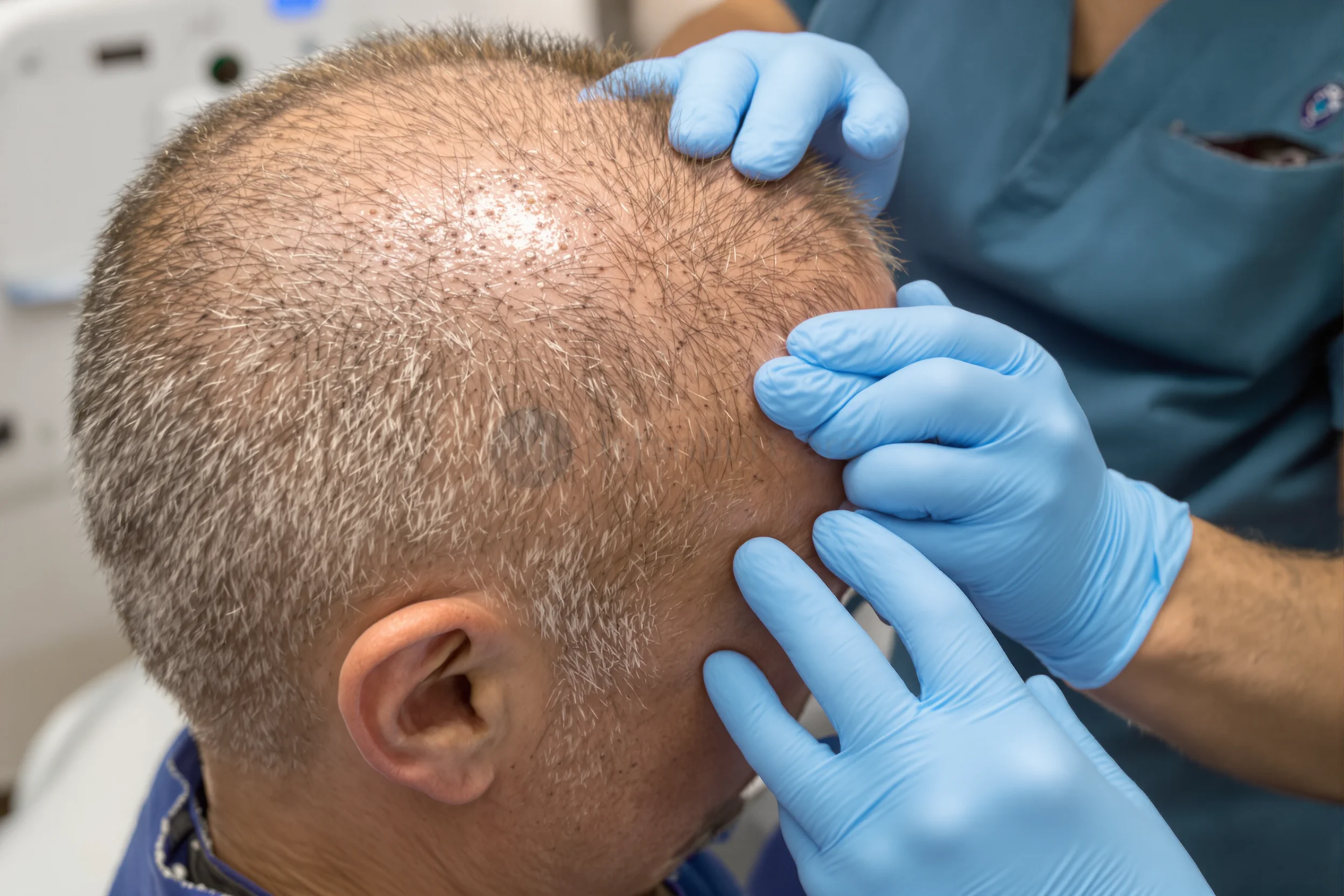
A search about surgery quickly introduces acronyms and method labels. Before comparing them, ask what kind of hair loss you have and whether surgery is appropriate now. Different causes of thinning call for different evaluation, and photographs cannot establish everything a clinician needs to know. The donor area refers to hair-bearing tissue from which follicles may be harvested; the recipient area is where grafts are placed. Those simple terms matter because donor supply is limited and future loss may change the cosmetic plan. A conversation focused only on a technique name, without an explanation of your loss pattern and goals, leaves the most important questions unanswered.
Clarify what a graft number means
A graft is a transplanted follicular unit, not a promise of a particular visible density. Two people can receive similar numbers and still have different appearances because hair characteristics, coverage area and underlying loss differ. A proposed number may be provisional until an in-person assessment. Ask why the team suggested the recipient area and graft range and how it intends to protect the donor region for possible future needs. Do not assume more grafts always produces a better outcome. Ask what happens if the examination indicates a different number or suggests postponement. A responsible plan explains the trade-offs, not merely an impressive count.
Separate roles in the procedure
The word “clinic” describes an organization rather than the person doing each step. Ask who assesses suitability, designs the hairline, performs extraction, creates recipient sites and places grafts. Clarify which steps are performed by a qualified clinician, how other staff are supervised and where the procedure takes place. The consultation should also cover consent, risks and alternative options. A sales coordinator may handle travel well while being unable to make clinical judgments. Knowing the difference helps you direct each question to the right person. Verify professional credentials through an appropriate independent channel where possible rather than relying only on a website badge.
The hairline is a plan, not a drawing contest
The proposed position, shape, and density of a hairline should be discussed in the context of your face, age, donor resources, and possible future loss. An attractive line drawn on a photograph may not be a sustainable plan. Ask what happens if the native hair behind it continues to thin. Terms such as 'maximum density' need a patient-specific explanation. A cautious design can sometimes preserve options; your clinician should explain the reasoning rather than asking you to accept a style on trust.
Consultation and consent
"Guarantee" may refer to a clinic policy rather than a predictable medical outcome. Read the written conditions, timing and remedy. Growth and cosmetic appearance vary, and future loss of nontransplanted hair can alter the result. A promise of a free revision may exclude new flights or accommodation. Ask whether another procedure would even be advisable given the remaining donor supply.
Read recovery language carefully
Terms such as 'downtime' can hide several different questions: when you can travel, when you can work comfortably, when visible changes settle, and when growth can be assessed. Ask the treating team about each separately. Redness, scabbing, swelling, and temporary shedding can occur; the expected course and warning signs should be explained for your circumstances. A photograph taken soon after treatment cannot establish the final appearance.
Translate marketing words into questions
“Natural,” “premium” and “best” are not substitute diagnoses or measurable promises. Ask what the provider means in terms of hairline design, donor use, named clinical responsibilities, limitations and likely follow-up. If you encounter a provider page while researching hair transplant turkey, use it to identify questions for a qualified consultation rather than accepting a universal claim of suitability. Photograph galleries and testimonials offer examples of particular experiences, not predictions for you. The most useful vocabulary allows you to understand a proposed plan, recognize what remains uncertain and decide whether another medical opinion or more time is needed.
Bring the vocabulary back to decisions
If a provider promises an exact density, says every reader is suitable, or offers a graft count without discussing donor limitations, pause and seek clarification. If you cannot reconcile the website, consultation, and written agreement, wait before paying. You do not need to master surgical vocabulary to make a careful choice. You need enough understanding to recognize what is known, what remains provisional, and what only an individual clinical examination can resolve.