Does Turkey Fit Your Hair Transplant Plan A Decision Guide — Gate three — can you absorb the full cost and uncertainty and Gate one — should surgery be considered
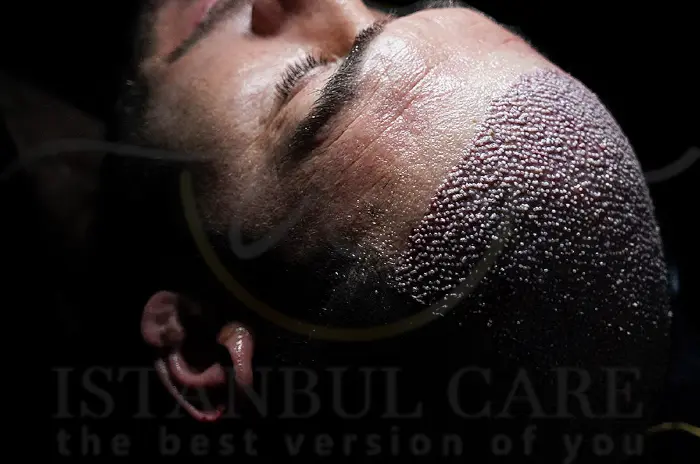
Imagine two readers attracted by the same travel package. One has a long-standing pattern of hair loss, has discussed the diagnosis with a clinician, and understands that a transplant moves a finite supply of follicles. The other has recently begun losing hair quickly and has not investigated why. They should not reach the same booking decision simply because the flight and clinic package are identical. The first reader might be ready to evaluate a surgical proposal. The second needs an assessment of the shedding before deciding whether surgery belongs in the conversation at all.
Gate one: should surgery be considered now?
First ask what is causing the hair loss. A transplant moves hair from one area to another; it does not diagnose a scalp condition or stop future loss of native hair. A clinician should consider your pattern of loss, its pace, medical history, medicines, scalp health, and the quality of the donor area. If your shedding is new or changing rapidly, a local assessment can be especially valuable before you buy a flight. There may be a condition requiring treatment or observation, and surgery might be premature.
Gate two: can you identify the people and place providing care?
For any turkey hair transplant inquiry, ask for the legal provider, facility address, responsible clinician's name, and the division of work on procedure day. Who examines you and draws the hairline? Who extracts grafts, creates recipient sites, and implants them? What is each person's training and authorization to perform that task? These questions matter because a brand, coordinator, and operating team are not necessarily the same entity. Require answers before paying a nonrefundable deposit.
Gate three: can you absorb the full cost and uncertainty?
Plan a contingency amount that you can actually access, without pretending to know what a complication would cost. The exact figure depends on your finances, insurance, country of residence, and options for local care. Ask the provider for written terms covering a postponed procedure, an incomplete procedure, a need for additional nights, and follow-up that cannot be managed remotely. Ask whether currency conversion or card fees affect payment. A quote that is inexpensive only if everything runs perfectly may not be affordable for your situation.
Gate five: is your follow-up route realistic?
Before booking, request a named clinical contact, expected response times for routine questions, and clear instructions for urgent concerns. Ask how photographs will be reviewed and when a video consultation is insufficient. Find out whether the clinic shares procedure records, medicines, and a summary that a clinician near home can use. If a provider says all postoperative issues can be handled by messaging, ask what happens when a physical examination is necessary.
Seventh branch: how trustworthy are the comparisons?
Online “best” lists, videos and social posts often bring several unlike cases into one frame. A polished image says little about donor preservation, future thinning, the role of each professional, or the patient’s treatment outside surgery. Ask whether a displayed result reflects similar starting circumstances, comparable lighting and adequate time since treatment. A testimonial can describe communication but cannot establish your probability of a particular result. Be cautious when an offer promises a guaranteed outcome or pressure increases as you request a clinical answer. Compare what you can verify: named responsibilities, a specific assessment route, informed consent, documented risks, written financial terms, and follow-up arrangements. Keep unanswered questions visible on your comparison sheet. Browsing a provider page for turkey hair transplant can be one step in discovery, but its claims still need the same scrutiny as any other commercial source. The useful comparison is between plans for your case, not between the loudness of advertisements. If independent information is scarce, ask more questions or take additional time.
Make a decision that survives the sales conversation
At the end of the tree, write down your answers. Is the cause of loss sufficiently understood? Has a qualified clinician found surgery plausible? Can you explain the proposed design and its limitations? Do you know who performs the work? Can you absorb the total trip cost and a reasonable disruption? Is there a workable route to care after returning home? If any answer is no, the next step is an assessment or clarification, not a deposit.
The sixth branch is your tolerance for uncertainty
Travel, surgery, and cosmetic outcomes all involve uncertainty, but people differ in what they can comfortably manage. Some can take time off, navigate another health system, and tolerate a long period before the appearance stabilizes. Others need close in-person access or cannot readily make another trip. Neither preference is a medical weakness. It is a practical constraint that deserves a place in the decision.