Evaluating a Hair Transplant Clinic in Turkey Through Its Documents — Read the documents together and Connect the quote to the care
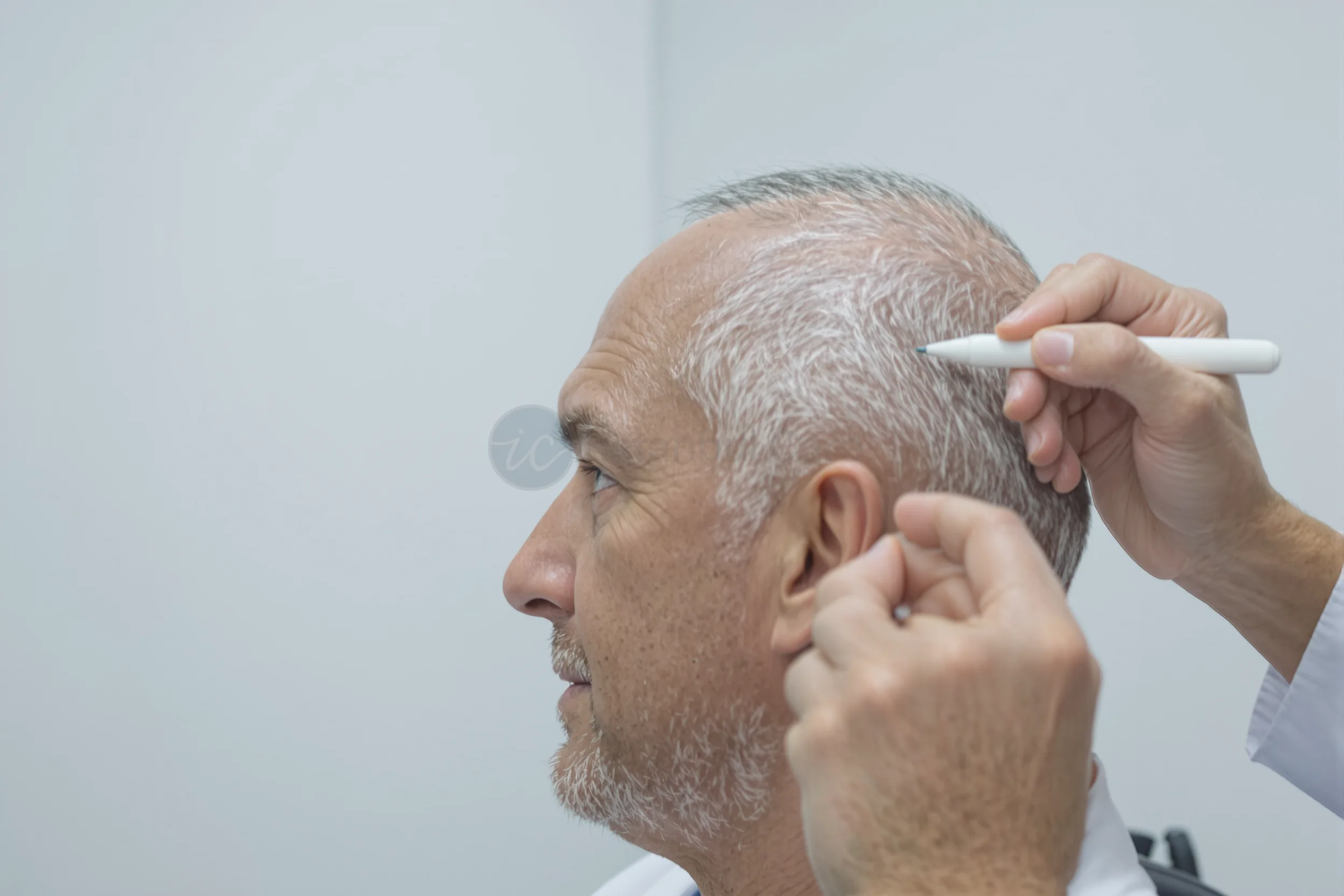
A clinic’s website can introduce services, but an individual decision needs documents tied to your case. Keep the written proposal, date, names or roles of the people who responded, and a copy of your own medical questions. Describe the pattern and course of hair loss, previous treatment and your realistic aim. If the cause has not been assessed, seek an appropriate clinical evaluation. A preliminary plan made from photographs should state what remains uncertain until examination. Place advertisements and galleries in a separate folder from clinical answers. This distinction helps you compare explanations rather than the polish of competing websites.
Start with the clinical assessment
A clinic's website can introduce its services, but the first document you need is an explanation of your own situation. Ask who assesses the cause and pattern of hair loss, what can be determined from photographs and what needs examination in person. Does the proposed plan discuss the donor area, treatment priorities and possible future loss? If the answer is only a graft number, ask how that number relates to the result you want. A clinician should also be able to explain why waiting or another approach might be appropriate.
The individualized proposal
When researching the best hair transplant clinic in turkey, ask how each provider balances immediate coverage against preservation of the finite donor supply. A dramatic hairline may look appealing today while using grafts that could matter if surrounding native hair thins later. The document should explain limits, alternatives and why a particular method is suggested for you rather than presenting a technique name as a universal answer.
Identify who takes responsibility
Who designs the hairline, performs extraction, prepares recipient sites, places grafts, and supervises the procedure? Ask for names and qualifications rather than assuming the person pictured on a site will complete every step. The roles can vary with the clinical arrangement, but they should be clear before you consent. If staff may change, ask when and how you would be informed.
Read the documents together
Look closely at payment conditions. Ask when the deposit becomes nonrefundable, what happens if illness delays travel, and how refunds work if surgery is not recommended on arrival. Hotel and airline rules may be separate. Calculate your own flights, leave from work, and extra nights instead of treating the clinic's displayed amount as a complete trip budget.
The people behind the procedure
If credentials are cited, ask who issued them, whether they remain current and whether they describe an individual, a facility or membership in a professional group. A badge alone cannot establish the quality of your planned procedure. Documenting the precise scope prevents a facility certificate from being mistaken for certification of every person pictured on the website. When verification is possible, use the issuing body's own record rather than a cropped promotional image.
The agreement for travel and care
Read the quote as a list of services: consultation, tests, surgery, medicines, early checks, hotel, transfers and follow-up. Record the payment currency, deposit and refund conditions. What if the in-person assessment advises against surgery? A clinic refund may not cover flights and accommodation booked separately. Keep those policies in separate rows of your budget.
Connect the quote to the care
An itemized estimate should identify clinical services, facility, medication, supplies, hotel, transfers and any exclusions. Keep travel arrangements separate so you can compare a procedure fee with another provider's package. Note deposit and refund terms if surgery is postponed or declined after examination. Ask who delivers follow-up, at what intervals and when a local medical assessment would be needed. If the price or plan changes, request a consolidated written update rather than interpreting several messages as a single agreement.
Choose an understandable plan
Make a short comparison sheet with one row for each document and question. Leave unanswered items blank until the provider responds. Photographs and reviews can supply context, but selected images and early travel reviews cannot predict your personal outcome. Your decision may be to seek a second opinion or postpone. The most useful clinic information is specific, consistent, and tied to named clinical responsibility and workable follow-up, regardless of a superlative in advertising.
Use examples with care
Patient images can help discuss design if their dates, lighting, additional treatments and number of sessions are known. Reviews can suggest questions about communication and recovery support. Neither source gives you a reliable success rate for your own case. Ask the clinician about foreseeable risks, uncertainty in growth and what would be done if complications occur.
Plan for a handover
Ask what clinical record you would receive before departure and how to share it securely with a professional at home. The record should make it possible to explain what was performed and what medication was prescribed. A contact route for urgent questions should be distinct from routine travel coordination. A provider's documentation is most valuable when it remains usable after the short trip ends.