How to Read Best Hair Transplant Claims Without Mistaking a Ranking for Evidence — Read photographs as case reports, not forecasts; Understand what photographs can
A ranking can make a complicated medical choice look like a contest with a single winner. For a prospective patient, however, suitability depends on the cause and pattern of loss, donor supply, health history, goals and future thinning. Decide which questions matter to your case before reading a list. You might value a careful clinical assessment, a conservative plan, clear roles during surgery and reliable follow-up. None of those can be established by a headline alone. If a page uses “best” without saying how entries were selected or whether payment affects placement, treat it as a source of names to investigate, not as a clinical verdict. Even an honest ranking cannot tell you what an individual examination would find.
Translate rankings into criteria
A page promising the best hair transplant in turkey might rank clinics by reviews, advertising relationships, editorial judgment, price, or an undisclosed formula. Find out who owns the page, whether providers pay for placement, when the list was last reviewed, and what evidence supports each position. A high position can be a reason to investigate a provider, but it is not evidence that the clinician is suited to your pattern of loss. If criteria are absent, treat the ranking as a directory rather than a clinical recommendation.
Start by asking what 'best' measures
A ranking can mean the cheapest advertised package, the most searched clinic, the highest review score, or an editor's selected favorite. None of those automatically measures the quality of surgical care for your particular hair loss. Before accepting a superlative, look for the criteria behind it. Does a listing explain how candidates were assessed, how outcomes were verified, and whether the publisher has a commercial relationship with featured providers? Does it compare a named medical team or only a brand? Even a transparent ranking cannot establish who is appropriate for you without diagnosis and direct evaluation. Treat 'best' as a question to unpack, not a badge that transfers from an article to an operating room. Write down your own criteria: clinical suitability, surgeon responsibility, donor planning, risk communication, aftercare, and total cost. These will make a useful comparison long after a search result has changed.
Read photographs as case reports, not forecasts
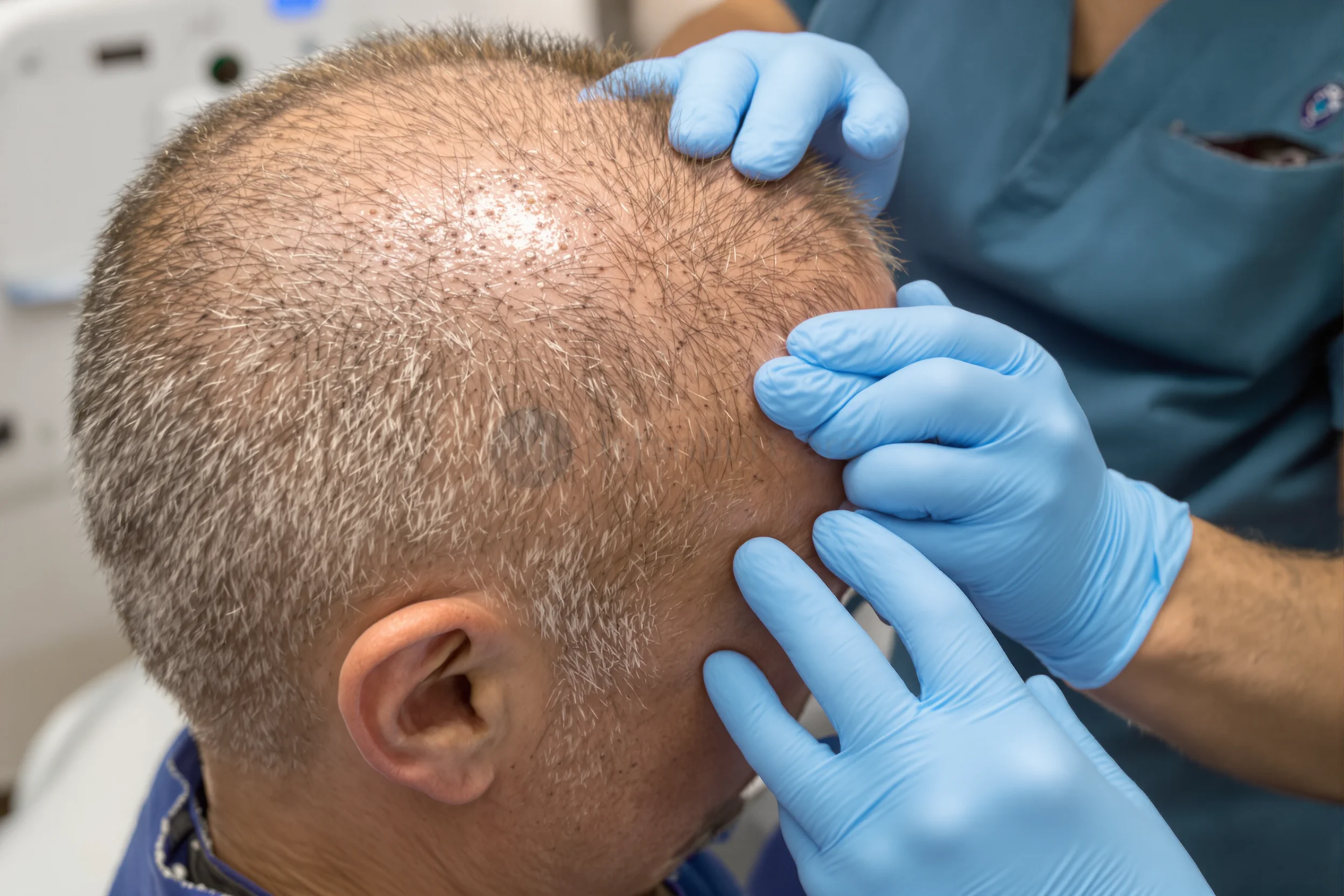
Before-and-after imagery can reveal the style of work a provider chooses to show. Ask when each photograph was taken, whether the patient underwent more than one session, and whether medication, styling, fibers, or other treatments affected the appearance. Similar camera angle, distance, lighting, hair length, and wet or dry state matter. A close-up of the frontal hairline without the donor area hides a central constraint. A wide view of the result without a preoperative baseline also offers little basis for comparison.
Understand what photographs can establish
Look for cases with starting patterns similar to yours while remembering that appearance alone cannot reveal donor density, hair caliber, medical history, medication use, or continuing loss. One photograph cannot show the full sequence from initial procedure through temporary shedding to later growth. A gallery that selects attractive outcomes is not a probability distribution for every patient. Ask the clinician what range of results may be realistic in your case and which goal cannot be achieved with your donor resources.
Compare methods by indications, not labels
FUE, FUT, and branded variations are frequently presented as competing marks of quality. Learn in broad terms how donor grafts are obtained and what different approaches might mean for scarring, recovery, and the use of your donor area. Then ask why the clinician recommends a method for you and what alternatives were considered. A technique cannot compensate for an inaccurate diagnosis, an unrealistic hairline, or unclear surgical responsibility. Be cautious with words such as 'scarless' or 'painless'; any surgery can involve discomfort and healing, and the appearance of scars varies. Ask for an honest description of limitations rather than a claim of universal superiority. The meaningful comparison concerns a particular clinician's proposed procedure for a particular patient, with risks and expected benefits explained in a way you understand.
Convert every claim into a question
For a statement such as “natural hairline,” ask how hairline position and future loss are considered. For “all-inclusive,” ask for an itemized list and exclusions. For “permanent result,” discuss ongoing loss of nontransplanted hair and realistic uncertainties. For “limited offer,” ask whether the clinical plan would change if you waited. Record the answers and who provided them. If you cannot check a claim or receive only a slogan in reply, leave it unresolved. The most useful evidence is a coherent individualized explanation that remains consistent across consultation, quotation and consent.
Compare written plans instead of brand positions
Provider pages discussing the best hair transplant in turkey may introduce options and services. Read such pages as commercial information from the provider. Neither the phrase nor a position in search results establishes an independent winner. Check the proposed plan against a qualified assessment, and seek another clinical opinion when an important point remains unresolved.